The Dynamics of Root Plate Failure in Saturated Illinois Soils
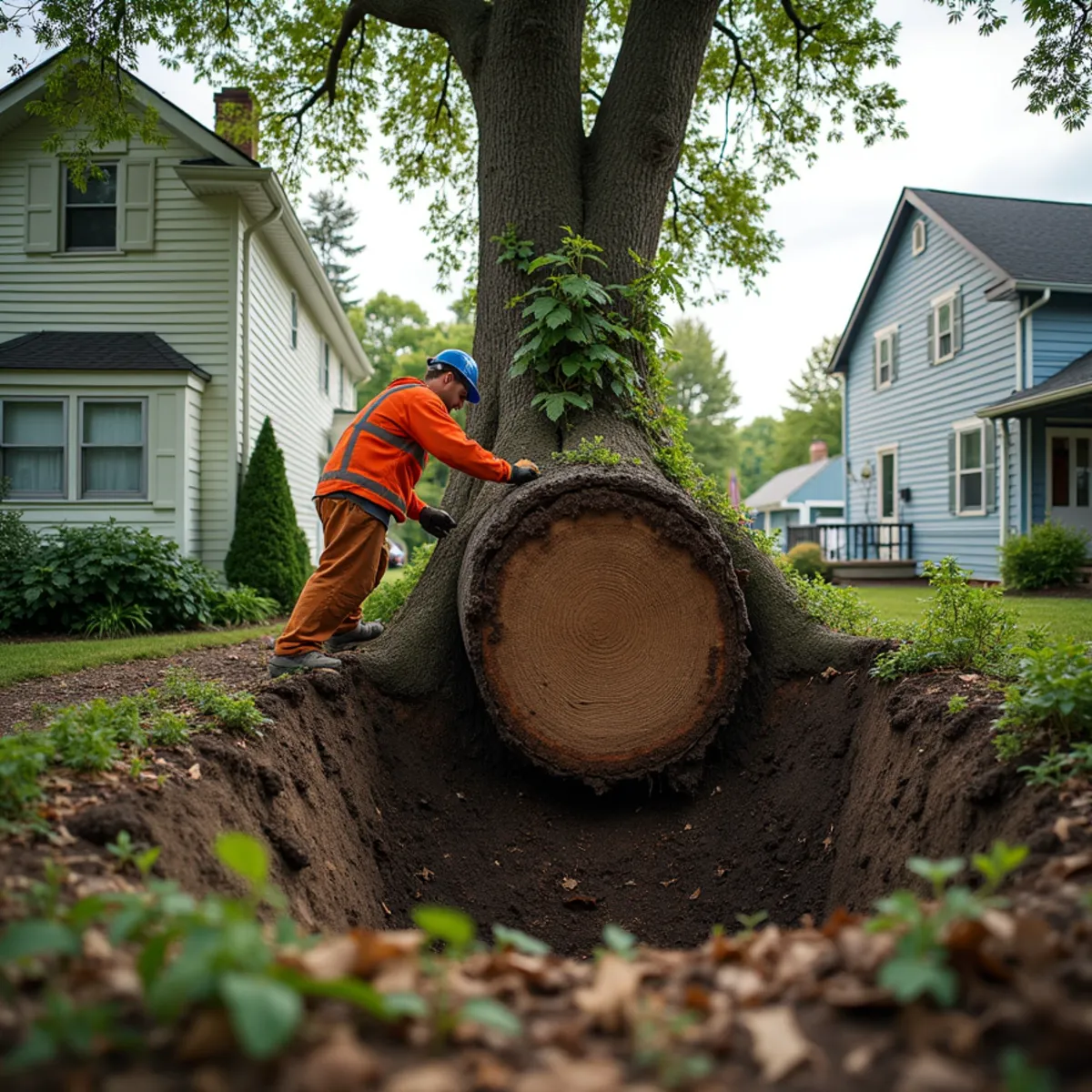
Severe summer thunderstorms and sudden derecho fronts across Central Illinois frequently combine high straight-line winds with torrential downpours. When heavy rain thoroughly saturates Sangamon County's dense illite clay soils, the friction holding tree root systems in place drops dramatically. Under sustained wind shear, massive hardwoods—especially shallow-rooted silver maples, sweetgums, and spruce trees—can tip completely over, tearing huge vertical root plates out of the earth and leaving craterous voids across residential lawns. Dense Central Illinois clay soils lose internal friction when completely saturated, allowing high straight-line derecho winds to lever massive root plates out of the ground.
The Deadly Recoil Hazard: Why Severing the Trunk Is Dangerous
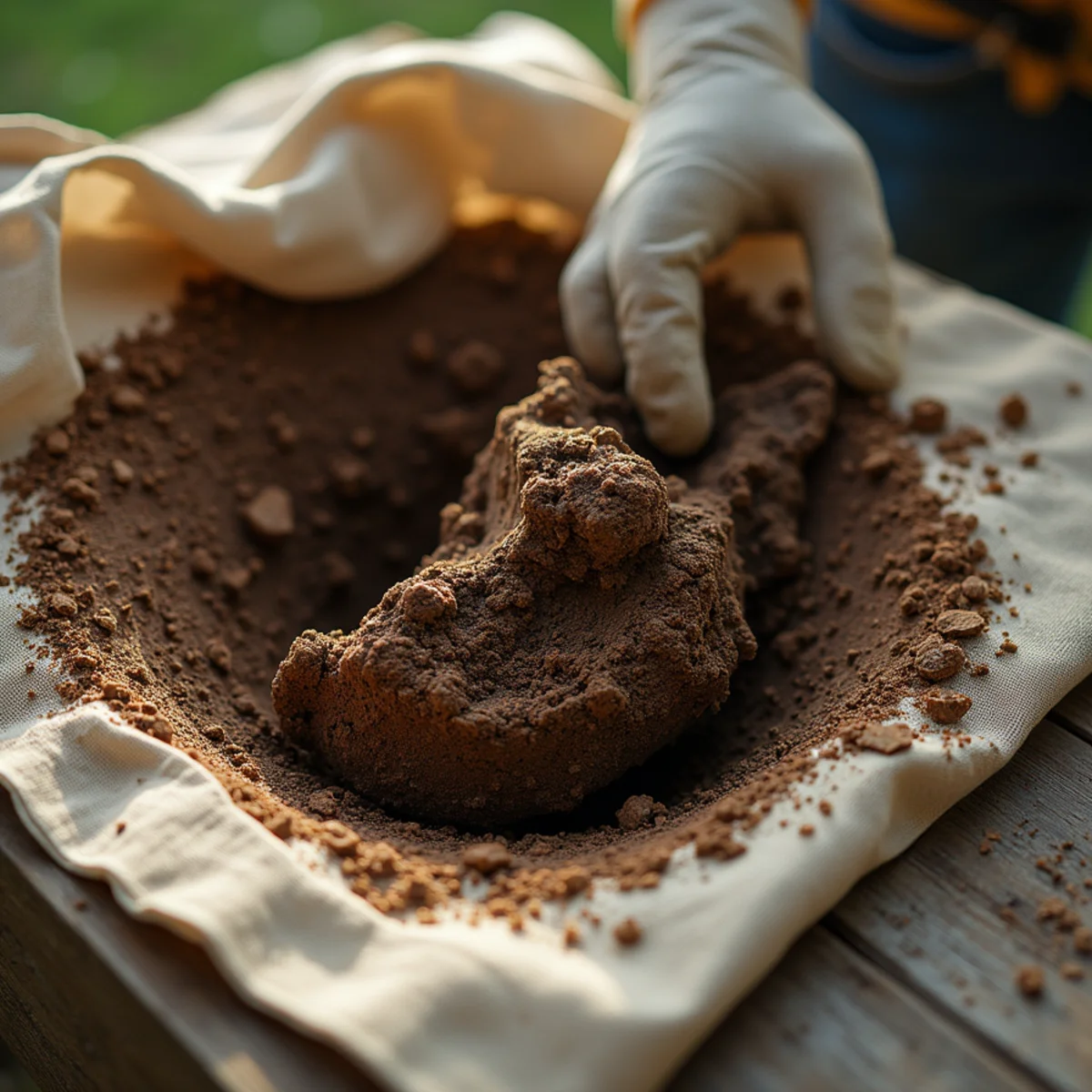
The single greatest danger associated with uprooted trees is the physical phenomenon of 'root plate recoil.' When an uprooted tree falls, the enormous circular root ball—often weighing between 3,000 and 10,000 pounds with adhered soil and rock—is held suspended under intense gravitational tension. If an inexperienced person cuts the trunk near the base, the sudden release of trunk weight can cause the massive root ball to violently snap upright like a mousetrap, crushing anyone standing in the crater or behind the plate. When the trunk is cut, the massive root ball can snap back into the crater under thousands of pounds of gravitational force, creating a deadly hazard for ground workers.
Need Professional Advice for Your Trees?
Call our local dispatch desk at (858) 780-5212. We provide prompt on-site evaluations across Springfield and Sangamon County.
Heavy Equipment Requirements: Track Loaders and Winch Restraints
Professional tree removal crews manage uprooted timber using specialized rigging and heavy machinery. Before making any relief cuts along the trunk, operators secure the root plate with heavy-duty winches, excavators, or track loaders to control mechanical movement. Rigging lines are tensioned to ensure the root plate is gently guided down or locked in place while arborists methodically section the canopy limbs from the top down, relieving stored mechanical pressure. Commercial tree contractors stabilize suspended root plates using heavy excavators, track loaders, and winch cables before making sectional cuts along the trunk.
Assessing Buried Infrastructure and Severed Utility Laterals
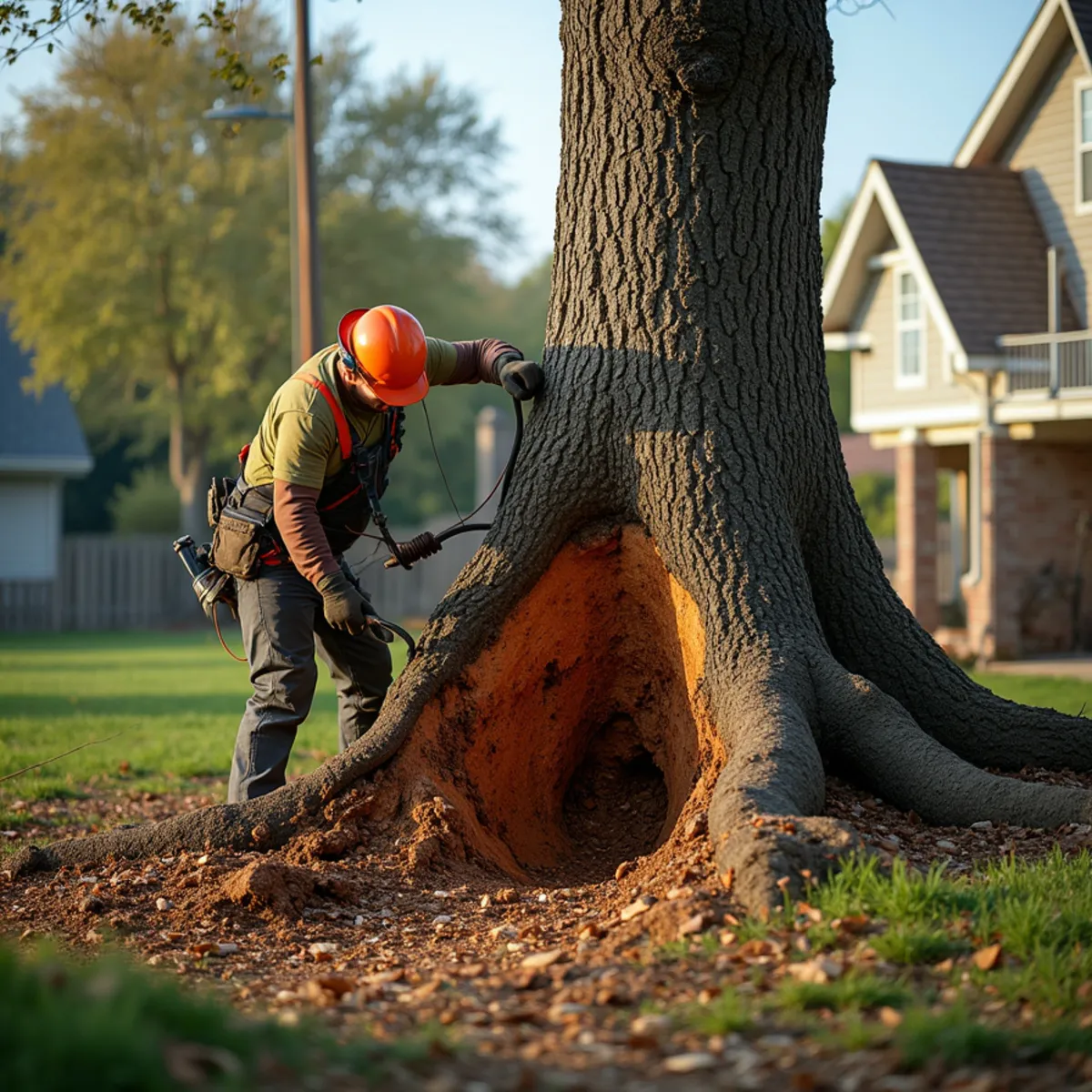
Uprooted root balls also present serious underground utility hazards. In residential neighborhoods across Springfield, Chatham, and Leland Grove, large root systems frequently interlock with buried gas service lines, municipal water laterals, electrical conduits, and fiber optic internet lines. When the root plate heaves out of the ground, it can bend or rupture these utilities. Calling JULIE 811 to inspect the perimeter and having emergency utility numbers ready is essential before mechanical extraction begins. Large root plates frequently entrap buried natural gas pipes, electric cables, or water lines, requiring utility verification before mechanical extraction proceeds.
Restoring the Crater: Topsoil, Compaction and Grade Leveling
Once the timber has been sectioned, loaded, and hauled away, homeowners are left with an enormous, jagged crater in their lawn. The root plate extraction removes hundreds of pounds of native topsoil that was tangled within the root network. Restoring the grade requires removing remaining severed root fragments, importing clean Central Illinois loam topsoil, compacting in 4-inch lifts to prevent future settling sinkholes, and grading smooth for turf re-establishment. Restoring deep root craters requires clearing root remnants, importing high-grade topsoil, and compacting the soil in layers to prevent sunken depressions.
Can an Uprooted Tree Ever Be Stood Back Up and Saved?
Homeowners occasionally ask whether an uprooted tree can simply be winched back upright and saved. While small ornamental saplings under 3 inches in trunk caliper can occasionally survive if replanted immediately and staked securely, mature landscape trees cannot be salvaged once uprooted. The rotational force of uprooting shatters the primary structural anchor roots and shears the microscopic feeder root system. Re-erecting a mature tree creates an unstable hazard with zero anchoring capability. Attempting to pull an uprooted mature tree upright is ineffective, as the structural anchor roots and delicate feeder root systems are permanently shattered.
Preventing Secondary Foundation and Turf Damage During Removal
Mitigating secondary property damage during uprooted tree removal requires turf protection protocols. Heavy tracked skid steers and commercial log loaders can severely rut wet lawns. Reputable tree services deploy heavy-duty high-density polyethylene (HDPE) composite ground protection mats, distributing machine weight across wider footprints to ensure lawns remain unmarred during multi-ton log extraction operations. Tracked equipment operating on heavy composite turf protection mats ensures that soggy lawns are protected from deep ruts during heavy log extraction.
Frequently Asked Questions on Uprooted Tree Removals in Springfield
Choosing an experienced local tree service with dedicated heavy rigging machinery guarantees that hazardous uprooted trees are neutralized safely. Our team at On The Grind maintains the equipment, rigging expertise, and insurance credentials required to safely dismantle uprooted hardwoods, stabilize dangerous root plates, and completely restore your property grounds. Professional tree contractors provide full-service site restoration, managing hazardous root ball stabilization, log haul-off, and lawn grade leveling.
Frequently Asked Questions on Uprooted Tree Removals in Springfield
The root ball acts like a counterweight under massive tension. When the trunk is cut, the root ball can violently snap back into its hole with thousands of pounds of force, causing catastrophic injury.