Why Visual Tree Hazard Assessment Saves Lives and Property
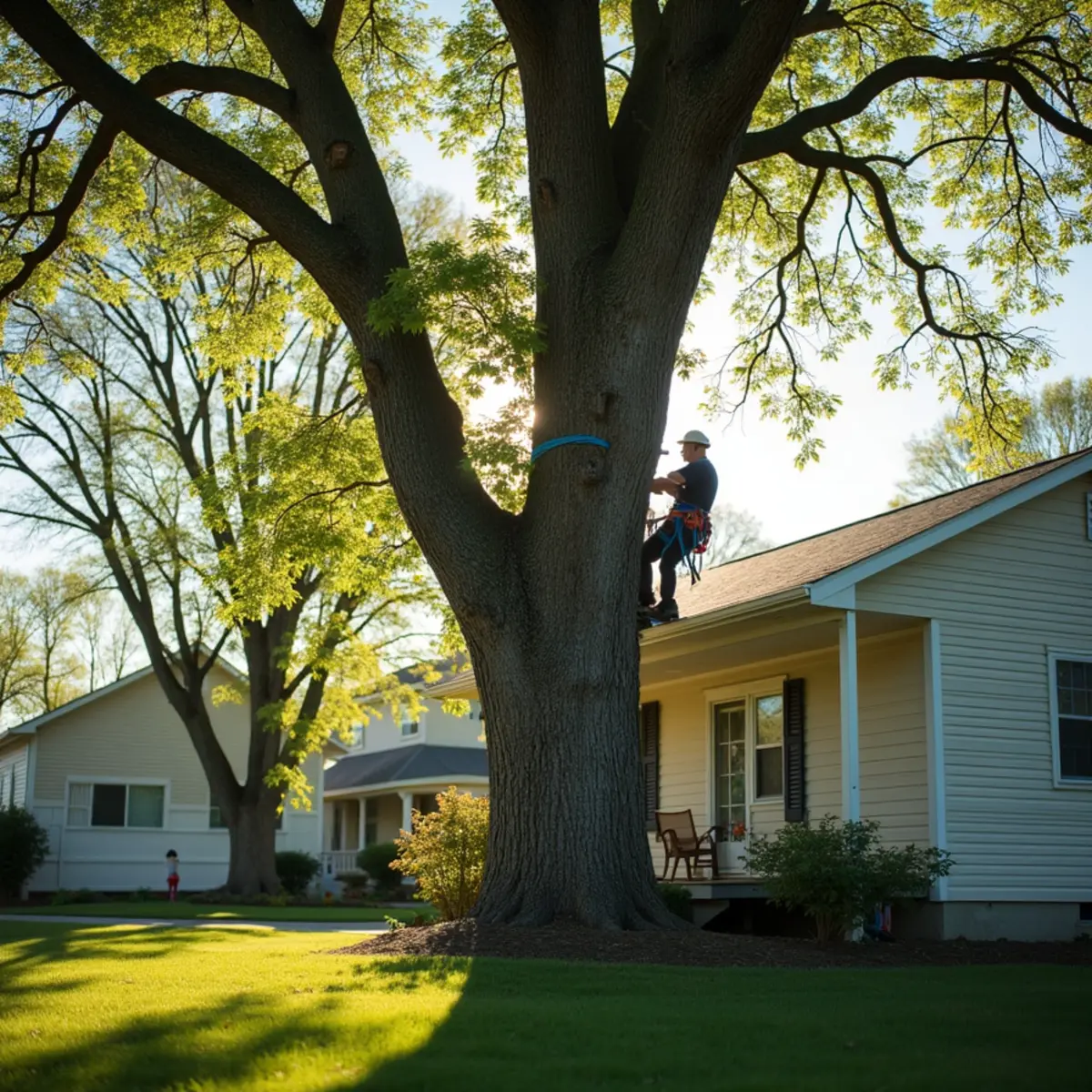
Mature shade trees are among the most valuable assets on any Central Illinois property, providing cooling shade, architectural beauty, and substantial property value. However, when an eighty-foot hardwood begins to suffer from internal rot, structural defects, or root failure, it transforms from a landscape asset into a multi-ton threat hanging over your roofline. In Springfield, Chatham, and surrounding communities, severe storms and freezing ice quickly exploit hidden tree defects. Recognizing the seven vital warning signs of tree hazard allows you to take action before catastrophe strikes. Proactive tree risk assessments enable Central Illinois homeowners to detect structural weaknesses before severe winds or winter ice trigger catastrophic failures.
Sign 1: Deep Trunk Cavities and Hollow Heartwood Columns
The first warning sign is the presence of deep trunk cavities or large hollow voids in the main trunk. While hollow heartwood does not automatically make a tree hazardous—since a cylinder of sound outer wood can provide structural rigidity—a tree becomes dangerous when the sound wood shell thickness drops below one-third of the trunk's radius. Large cavities where old limbs tore away or where woodpeckers have excavated extensive nesting galleries indicate active internal wood rot that significantly reduces resistance to high derecho wind shear. Large trunk cavities and hollow heartwood cylinders become dangerous when sound wood thickness falls below one-third of the trunk radius.
Need Professional Advice for Your Trees?
Call our local dispatch desk at (858) 780-5212. We provide prompt on-site evaluations across Springfield and Sangamon County.
Sign 2: V-Shaped Co-Dominant Stems with Included Bark
The second critical structural defect is the presence of 'co-dominant stems with included bark.' Co-dominant stems occur when two or more trunks of similar size grow upward from a single junction, forming a narrow 'V' shaped crotch rather than a strong 'U' shape. As the two trunks expand in diameter, bark is pinched between them instead of fusing sound wood fibers. This 'included bark' creates an inherent structural wedge. Under heavy ice accumulation or wind shear, the joint splits apart, sending half the tree crashing down. Narrow V-shaped stem unions with included bark lack interlocking wood fibers, creating severe splitting hazards under high wind shear.
Sign 3: Fungal Conks, Mushrooms and Bracket Fungus at the Base
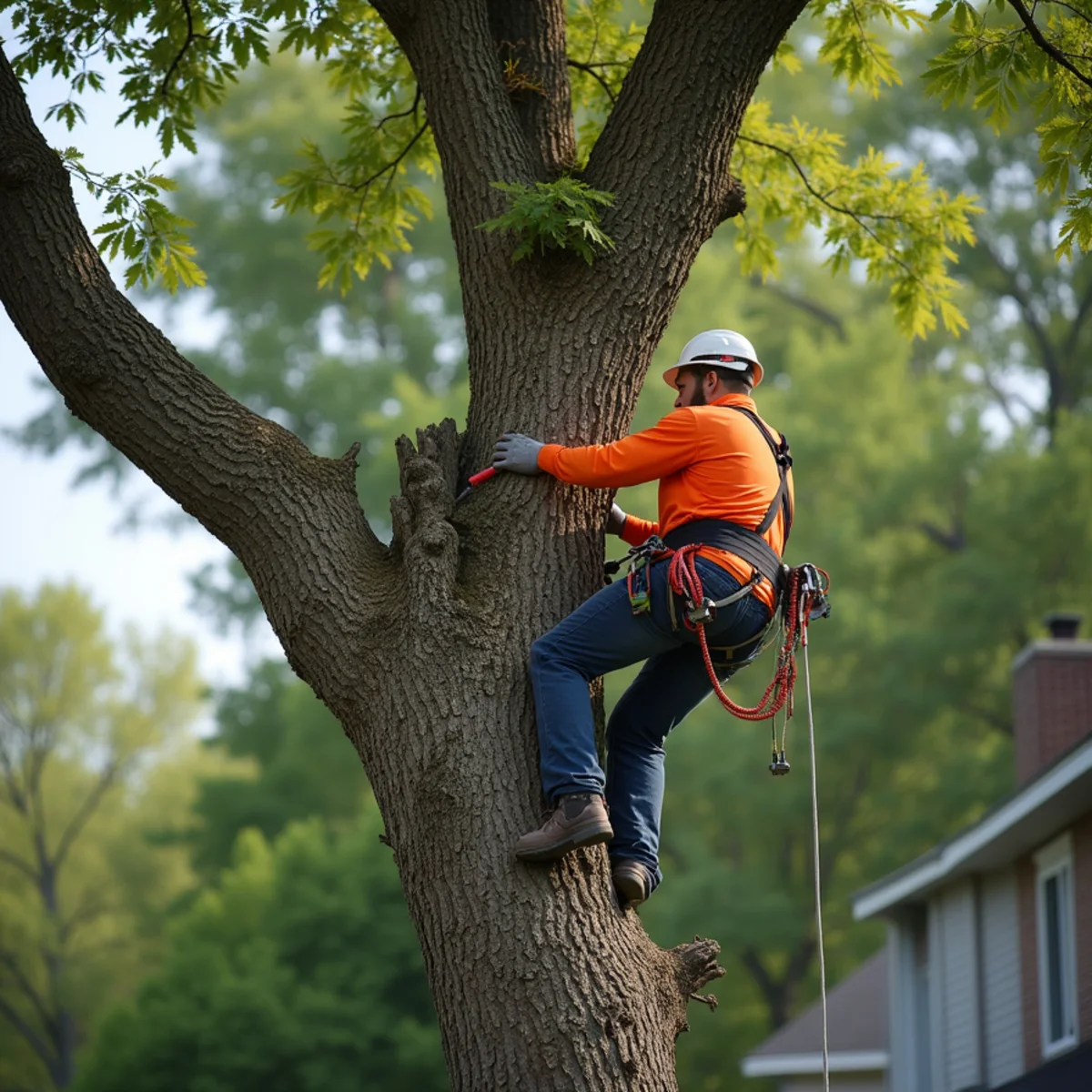
The third indicator is the emergence of fungal conks, bracket fungi, or mushroom clusters growing on the lower trunk flare or exposed surface roots. Fungi like Ganoderma applanatum (artist's conk) and Inonotus dryadeus are wood-decay pathogens that consume structural lignin and cellulose. When you see shelf-like conks sprouting from the base of a tree, it indicates extensive heartwood or root rot has already consumed internal support tissues, even if the upper canopy still appears green and vibrant. Fungal conks and bracket mushrooms at the trunk flare indicate extensive internal heartwood and root rot that compromises structural anchorage.
Sign 4: Sudden Trunk Leaning and Root Plate Mounding
The fourth sign is a sudden or noticeable change in the tree's vertical lean, especially when accompanied by soil heaving or mounded turf on the side opposite the lean. Trees that grow naturally at an angle compensate over decades by laying down dense reaction wood. However, if a tree shifts noticeably after heavy rain or high winds, or if you notice fresh cracking in the soil near the root plate, the root system is actively shearing. This indicates imminent whole-tree uprooting and requires emergency arborist attention. A sudden lean accompanied by mounded soil or cracked turf indicates active root plate shearing and demands immediate emergency arborist attention.
Sign 5: Deadwood Hangers and Widowmaker Limbs in the Upper Canopy
The fifth danger sign is the presence of large deadwood limbs or suspended 'widowmakers' trapped in the upper canopy. Limbs exceeding three inches in diameter that have died lose their flexibility and can snap without warning on calm, sunny days due to gravity and dry rot. If an overhanging branch is devoid of leaves or has shedding bark, it poses a severe strike hazard to anyone walking beneath or to parked vehicles. Heavy deadwood branches and suspended widowmakers in the upper canopy can drop without warning on calm days, threatening anyone walking beneath.
Sign 6: Deep Vertical Bark Cracks and Frost Seams
The sixth warning sign is the development of deep, vertical bark cracks or frost seams penetrating deep into the trunk wood. Unlike superficial surface bark fissures, structural cracks extend into the xylem. They are frequently exacerbated by Central Illinois winter freeze-thaw cycles and straight-line wind twists. When cracks appear on opposite sides of a trunk, the tree has suffered a through-and-through fracture and is in immediate danger of snapping in half. Deep vertical bark fissures and frost cracks that penetrate deep into the sapwood compromise the trunk's structural load-bearing capacity.
Sign 7: One-Sided Canopy Dieback and Premature Autumn Defoliation
The seventh sign is asymmetric canopy dieback, where one entire side of the crown exhibits withered foliage, dead branch tips, or premature autumn leaf drop while the other side appears normal. Because trees maintain segmented vascular connections between specific root sectors and corresponding canopy branches, localized crown decline usually indicates that the root system beneath that quadrant has rotted or been severed by utility trenching. An ISA Certified Arborist should evaluate the tree immediately. Asymmetric crown dieback often indicates localized root failure or vascular decline, requiring thorough arborist evaluation to determine tree stability.
Frequently Asked Questions About Dangerous Trees in Springfield
Distance alone does not define danger; a healthy tree two feet away can be stable, while a diseased tree forty feet away can crush a home. The hazard depends on structural health and height relative to target proximity.