Surface Tree Root Removal & Root Flare Chasing in Springfield, IL
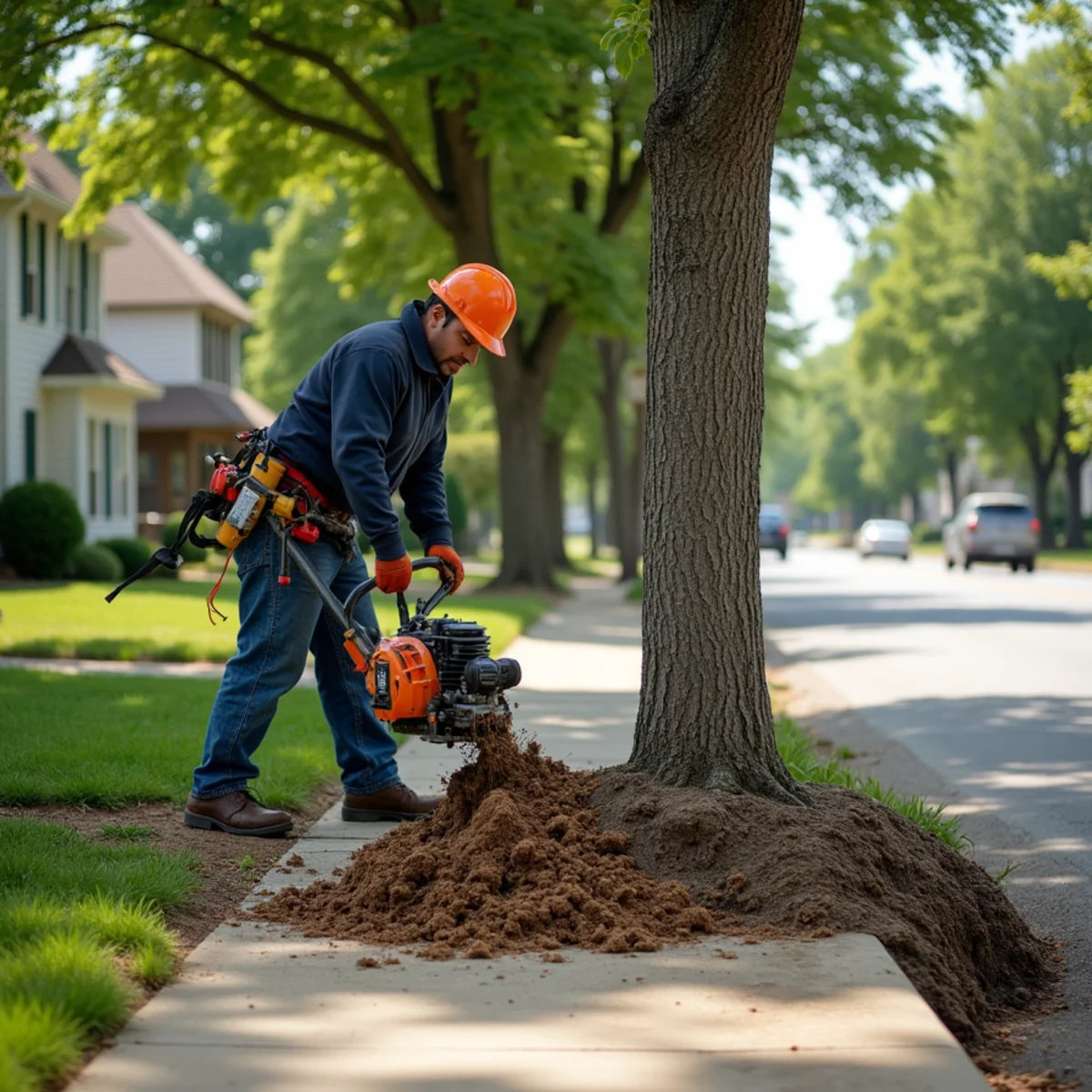
When aggressive lateral roots break through manicured turf, damage mower blades, or heave concrete flatwork, professional tree root removal in Springfield, IL restores lawn smoothness, protects property investments, and eliminates hazardous tripping liabilities. Protruding surface roots across Central Illinois residential yards are a persistent frustration for property owners: as mature hardwoods expand, woody buttress roots thicken radially, pushing through topsoil, rupturing turf grass root systems, and fracturing paved driveways, sidewalks, and patios. Our specialized Springfield root mitigation crews deploy narrow-profile high-torque root grinders, subterranean trenching tools, and mechanical root shears to surgically excise invasive surface roots below grade without destabilizing healthy trees or leaving unsightly ruts across your yard.
In Sangamon County, heavy glaciated silt loams and dense illite prairie clay subsoils naturally restrict downward root penetration. With poor subsurface percolation and compact sub-horizons, oxygen levels drop sharply just inches below the surface. Water-demanding species like silver maples, green ashes, sycamores, and boxelders adapt by expanding shallow horizontal root mats directly along the surface. Left unaddressed, these woody ridges continue expanding each growing season, lifting concrete slabs by inches and turning routine lawn mowing into an obstacle course. Our fully bonded and insured arborists provide targeted root flare chasing, precision hardscape root pruning, bio-barrier installations, and complete turf reconditioning across Springfield and neighboring communities.
Need Professional Tree Root Removal in Springfield?
Call our dispatch team at (858) 780-5212 for rapid callbacks and transparent, upfront written quotes.
Why Trees Form Destructive Surface Roots Across Central Illinois Lawns
Surface root formation is not an arboricultural defect but a biological adaptation driven by Midwestern soil physics:
- Prairie Clay Soil Bulk Density:Springfield topsoil typically transitions into dense, impermeable clay within 8 to 12 inches. High bulk density and low porosity create an impenetrable barrier that prevents taproots from descending deeply.
- Subsurface Hypoxia (Oxygen Depletion):Tree roots require soil oxygen for cellular respiration. Because Sangamon County clay stays waterlogged throughout wet spring months, roots stay near the aerobic surface horizon where atmospheric gas exchange occurs freely.
- Radial Secondary Wood Thickening:When a tree is young, its lateral feeder roots are thin and flexible beneath the sod. However, as the trunk expands over decades, these lateral anchors undergo annual vascular cambium growth, expanding radially until their upper surfaces breach the lawn grade.
- Soil Erosion & Turf Thinning:Natural sheet erosion, mower scalping, and dense canopy shade gradually wash away topsoil, exposing roots that were originally subterranean.
Protecting Sidewalks, Driveways, Foundations & Mower Decks
Surface roots exert tremendous hydraulic growth pressure (turgor pressure exceeding 150 psi) capable of displacing heavy infrastructure:
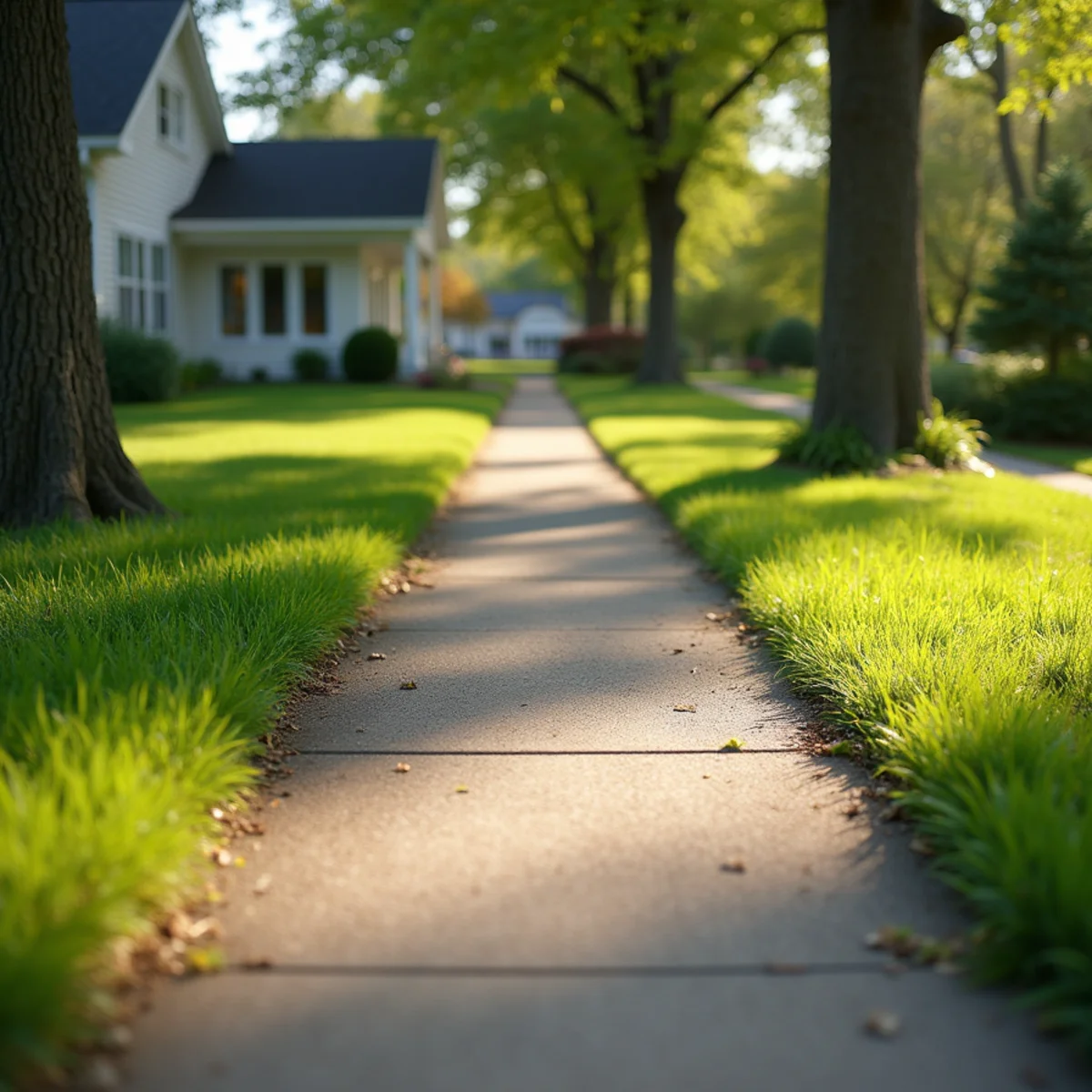
- Sidewalk Heaving & Municipal Violations:Thick roots growing beneath concrete slabs lift flags unevenly, creating sudden 1- to 3-inch vertical lips that violate Americans with Disabilities Act (ADA) accessibility codes and create premises liability exposure.
- Asphalt Driveway Cracking & Pavement Ruptures:Roots tracking beneath asphalt heat up and cause linear fracturing, allowing winter freeze-thaw water to enter and destroy driveway sub-bases.
- Foundation Perimeter Encroachment:While tree roots rarely penetrate solid poured concrete foundations, they can displace exterior perimeter weeping tiles, perimeter waterproofing membranes, and basement cinder blocks.
- Lawn Mower Blade & Spindle Destruction:Striking exposed woody knuckles blunts rotary mower blades, bends deck spindles, and damages mower transmissions while creating dangerous scalped bald spots across your turf.
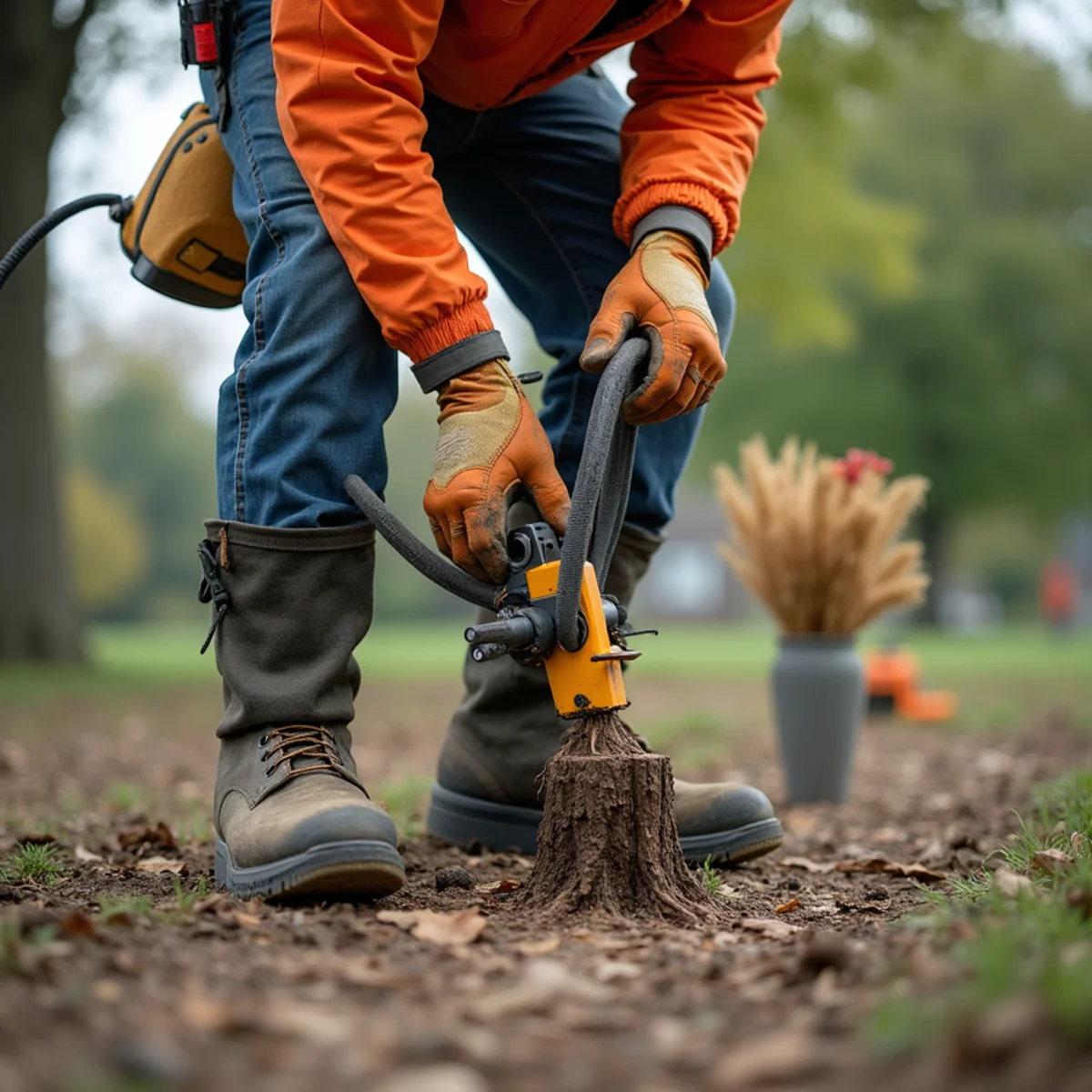
Safe Root Pruning Without Compromising Tree Health & Anchorage
Excising tree roots requires rigorous biological understanding to protect the parent tree's vascular balance and mechanical stability:
- Respecting the Critical Root Zone (CRZ):The structural root plate directly adjacent to the trunk (calculated as roughly 3 to 5 times trunk diameter) provides the mechanical ballast holding the tree upright against high prairie winds. We never sever primary anchoring roots inside this critical boundary.
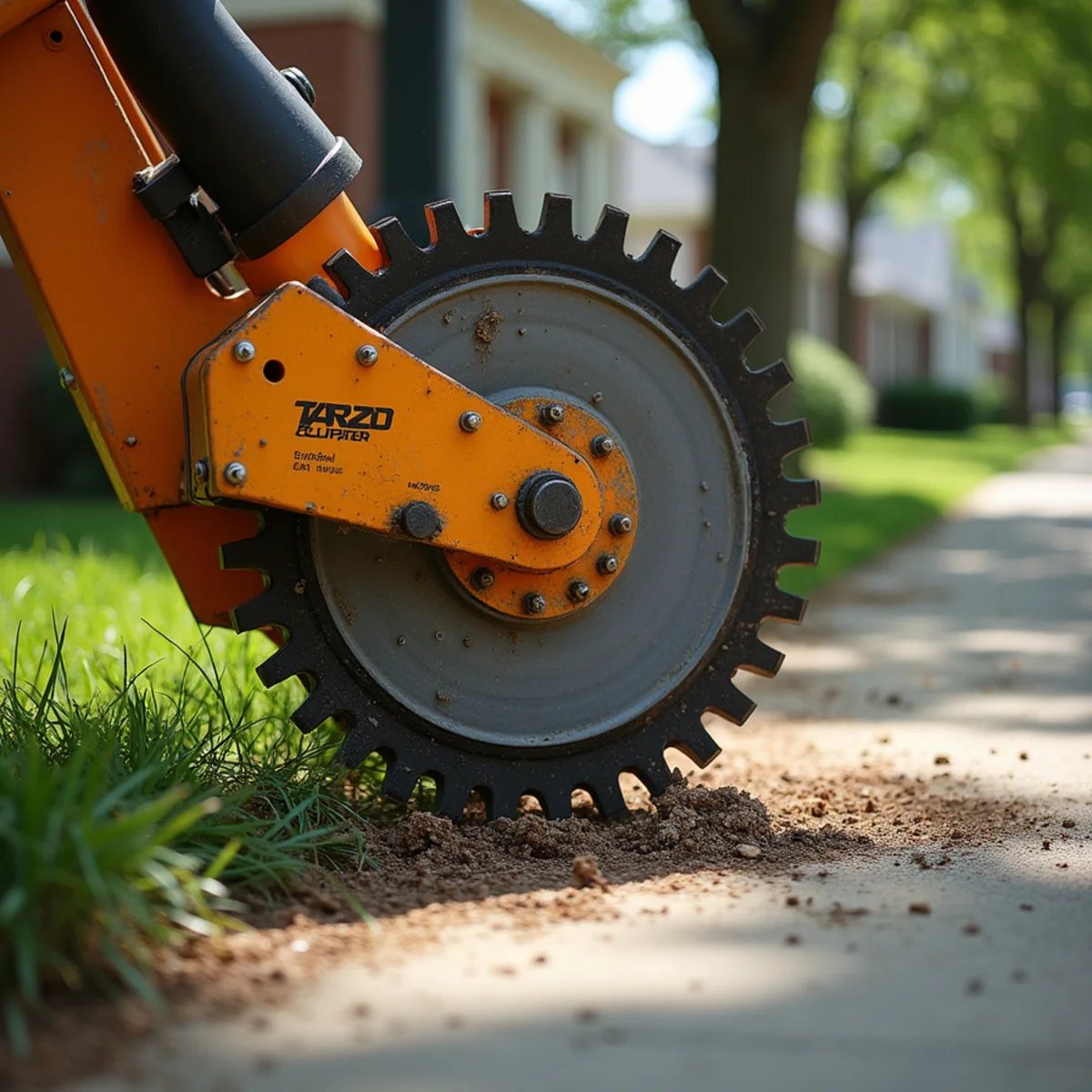
- Surgical Root Chasing in the Outer Perimeter:Beyond the structural root zone, lateral surface roots can be selectively chased and ground down 4 to 6 inches below soil grade. Clean cuts with high-speed diamond-tipped grinder teeth prevent jagged shredding, allowing the tree to compartmentalize the wound without fungal wood rot spreading.
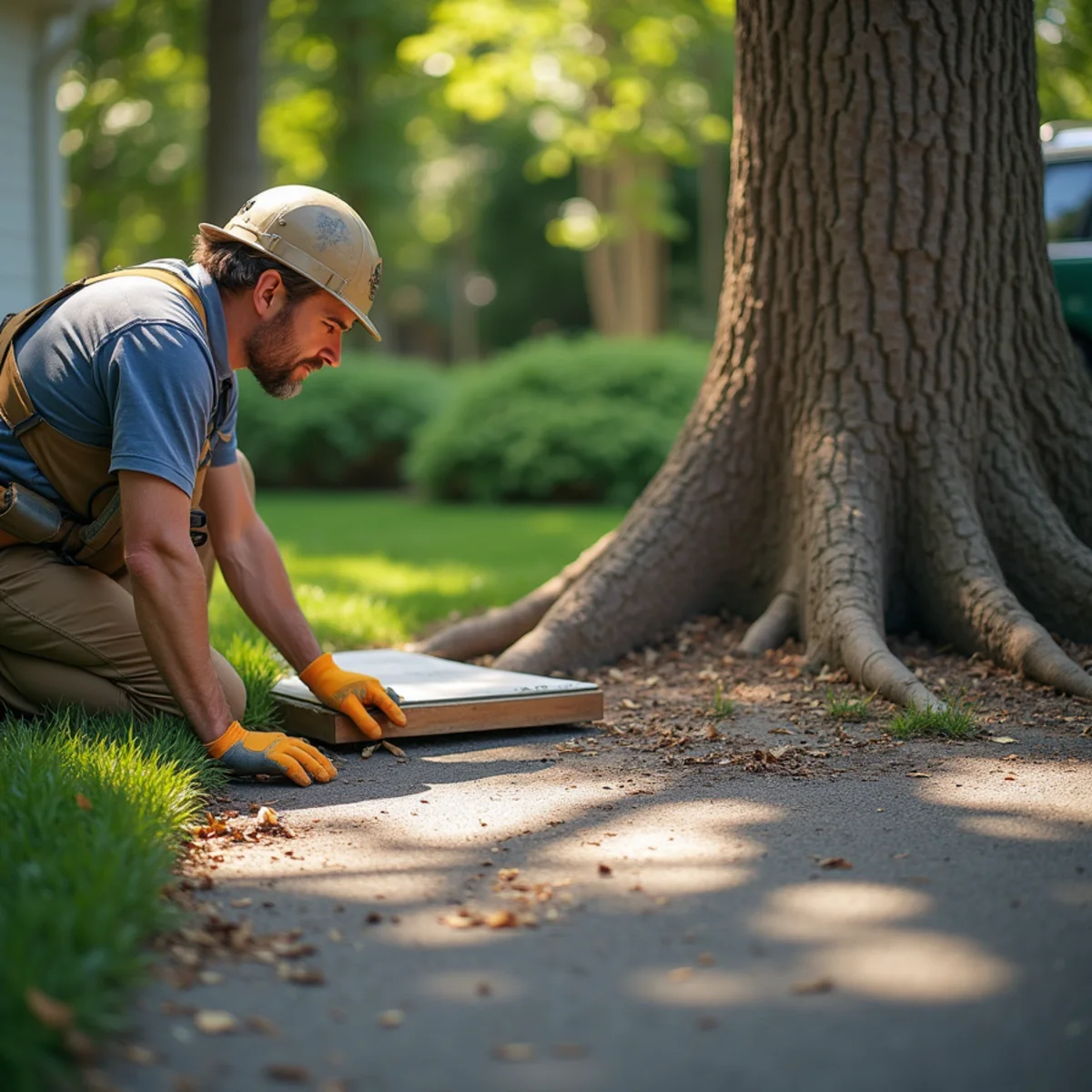
- Installing High-Density Polyethylene (HDPE) Root Deflectors:Along driveway margins and foundation footings, we install vertical 18- to 24-inch semi-rigid HDPE root barrier panels. These barriers redirect future lateral root growth downward beneath hardscapes without harming the tree canopy.
- Post-Pruning Canopy & Hydration Balancing:Following extensive root pruning, our arborists provide recommendations for supplemental summer irrigation and light crown thinning to balance canopy transpiration with reduced root uptake.
JULIE 811 Verification for Buried Secondary Utilities
Underground root grinding carries significant utility strike hazards that require disciplined precautions:
- Shared Subsurface Real Estate:Low-voltage outdoor landscape lighting, buried cable television conduits, secondary electrical drops, gas service lines, and irrigation piping frequently share the exact top 6 to 12 inches of soil where surface roots congregate.
- Mandatory JULIE 811 Utility Locate Protocols:Before operating mechanical root grinding machinery or trenching equipment, our team contacts JULIE 811 to execute certified line markings across the property.
- Hand Excavation in High-Risk Tolerance Zones:Within 18 inches of marked gas or electric utility lines, we avoid mechanized grinding, utilizing pneumatic air spades or gentle hand digging to expose roots safely before making manual bypass saw cuts.
- Irrigation Lateral Mapping:We work closely with homeowners to map out private sprinkler heads and poly lines before chasing root spurs across turf.
Pricing Considerations for Surface Root Grinding & Chasing
Tree root removal pricing in Springfield is calculated based on linear foot measurements, site access, and restoration scope:
- Linear Footage & Root Caliper:Costs depend on the cumulative linear feet of surface roots to be ground out and their cross-sectional diameter (ranging from 2-inch surface runners to 12-inch buttress roots).
- Proximity to Concrete Flatwork:Grinding flush against concrete walkways or asphalt borders requires specialized edge shields and manual chisel work, which involves more operational care than open lawn grinding.
- Root Barrier Installation:Adding vertical HDPE bio-barriers to prevent future root heaving adds material and dedicated trenching costs.
- Soil Backfill & Turf Seeding:Comprehensive packages include supplying clean screened Sangamon County topsoil, backfilling ground trenches, and overseeding with premium shade-tolerant turf seed.
- Sangamon County Coverage:We provide surface root chasing across Springfield, Chatham, Sherman, Rochester, Riverton, Leland Grove, Jerome, Grandview, Southern View, Williamsville, Auburn, Pawnee, and New Berlin.
Frequently Asked Questions About Springfield Tree Root Removal
Yes, when root pruning is restricted to the outer canopy perimeter outside the tree's critical root zone. We prune only non-structural lateral roots, making clean surgical cuts that allow the tree to compartmentalize naturally while retaining 80–90% of its root volume and anchoring strength.